A Watercolor Otter Design for Embroidered Crafts
Let’s talk about this Watercolor Otter Clipart Volume –1 as if we’re about to load it into our embroidery machine, not just admire it on a screen. When you’re selecting a design for a real project—whether it’s a custom sweatshirt for a client or a batch of tote bags for your small shop—you need to judge it on practical terms. How will it stitch out? What mood does it convey? Will it add value to the finished product? I approach every design with these questions, and here’s my take on this particular otter.
The First Impression: Soft, Playful, and Immediately Giftable
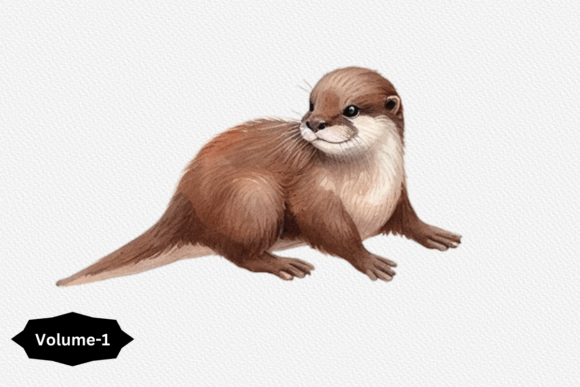
Opening the file, the first thing you notice is the gentle, watercolor aesthetic. It’s not a hard-edged, graphic illustration; it has a soft, almost painterly personality. This creates an instant mood of warmth and playfulness. The otter itself is charming, with a layout that feels balanced and central—a classic choice for an embroidery project where the design needs to be the clear, focal point. The detail level is interesting: it has enough visual texture to suggest the watercolor technique, but without overly intricate, tiny lines that could become a stitching nightmare. This tells me it’s a design that belongs on items meant to feel special, handmade, and personal. Think a baby blanket for a nursery, a cozy pillow cover, or a kitchen towel meant as a heartfelt gift. It doesn’t shout; it smiles.
Where This Otter Shines in Real Embroidery Projects
I immediately picture this design applied to a natural canvas tote bag or a soft cotton sweatshirt. The watercolor style translates beautifully into embroidery because the stitch texture can mimic that soft, blended look, especially with careful thread color selection. For apparel decorators, it’s a strong choice for women’s and children’s apparel—the theme is universally appealing. It would work wonderfully for holiday gifts, like embroidered tea towels or aprons, adding a custom touch without being overly seasonal.
For craft businesses and Etsy sellers, this otter is a ready-made asset for creating personalized products. Imagine a simple, embroidered patch with this design applied to a denim jacket. It lifts the item’s perceived value. In boutique branding, a design like this, used consistently on your merchandise—say, on the corner of all your handmade pillow covers—can build a recognizable, gentle aesthetic that customers trust. It’s also excellent for printable mockups to preview your digital embroidery files or for showcasing finished products in your online listings. The high-resolution detail means it will look crisp in digital previews, which is crucial for buyer engagement.
A Practical Scenario: Crafting a Custom Embroidered Baby Gift
Let’s walk through a real case. A client requests a personalized baby gift set: a muslin blanket and a matching cap. They want something unique, not a generic cartoon. I pull up the Watercolor Otter Clipart Volume –1. The soft colors and friendly animal theme are perfect. I consider the stitch-out. On light-colored, textured fabrics like muslin, the design’s transparent background (thanks to the PNG format) is a gift—no awkward bounding box. I’d likely opt for a mix of fill stitches for the otter’s body and finer satin or running stitches for the subtle watercolor edges. The final product feels artisan, not mass-produced. That’s the kind of reaction you want from both the gift-giver and the recipient.
Where to Use This Design with Extra Care
While versatile, any design has its limits. The watercolor effect implies some areas of softer detail. On very small hoop sizes, those subtle gradients might lose clarity and become blobs. I’d be cautious stitching this onto very textured fabrics like heavy wool or onto dark fabrics without thorough testing—the light, watery colors need contrast to pop. Stretchy fabrics like t-shirts require excellent stabilizer to keep the larger fill areas from distorting.
Curved surfaces like caps can be tricky if the design has wide, dense areas; the 3600 x 3600 pixel size suggests scalability, but you must check the stitch density at your intended size. For products that need frequent washing, like kitchen towels, you’d want to ensure the stitch coverage is solid enough to withstand wear without the design looking faded. And while it’s a single PNG file, fantastic for graphics and previews, remember that for machine embroidery, you’ll need to convert it to an embroidery file format, which means paying close attention to how those painterly details translate into actual stitches. Test, test, test on scrap fabric first.
How This Design Influences Your Craft Business
Using a design with this much visual appeal isn’t just about making a nice item; it’s about building your brand’s reputation. A well-executed embroidery of this otter on a product signals professionalism. It shows you care about the aesthetic quality of your handmade products. This increases customer trust—they see the design as part of a cohesive, thoughtful product, not just a random image slapped on.
For commercial embroidery projects, such as producing a line of merchandise for a small shop, this design offers a giftable, recognizable motif that can be adapted across different products (tote bags, pillow covers, aprons), creating brand consistency. The “giftability” factor is high, making it ideal for holiday markets or craft fairs. It engages buyers because it tells a soft, visual story.
Essential Notes for the Embroidery Designer Before Hooping
Before you commit this otter to fabric, here’s my checklist:
- Always test the design on a scrap of your target fabric first. This is non-negotiable.
- Check thread color contrast against your fabric background. Do a black-and-white mockup to see if the values separate well.
- Review the stitch density once converted to an embroidery file. A high-resolution PNG doesn’t automatically mean perfect stitch settings.
- Confirm your hoop size can accommodate the design at the size you want it to appear.
- Inspect how the small details, like the otter’s features, will be rendered in stitches. Will they be clear?
- Use the proper stabilizer for your fabric type to preserve those soft watercolor edges.
- Crucially, confirm the licensing terms for this design before selling finished items or digital products. The provided details don’t specify this—you must check.
- Remember, this is a graphic file. Its performance as a machine embroidery design depends entirely on your digitizing skills or the quality of the conversion.
The Watercolor Otter Clipart Volume –1 is a delightful graphic asset. From a designer’s perspective, it holds real potential for embroidery projects that require a warm, handmade touch. Its strength is in its mood and theme, making it a natural fit for personalized gifts and craft business items where emotion and quality are part of the product. Approach it with practical preparation, and it could become a staple in your library for creating products that people truly love to hold, give, and keep.