A Designer’s Review of Watercolor Hydrangea Graphics & Illustrations
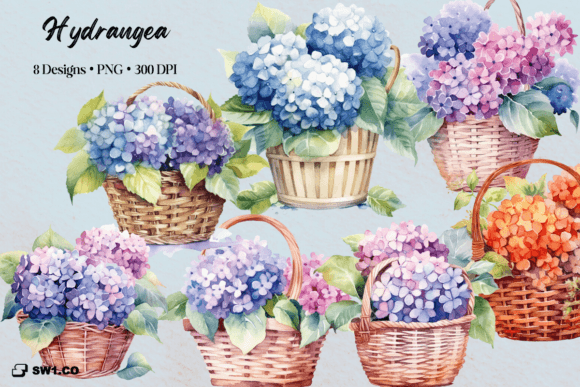
When a new digital product lands on my screen, my first instinct is to imagine it in a real client’s hands. Recently, I was evaluating the Watercolor Hydrangea Flower Clipart collection—a set of eight unique, high-quality PNG files with transparent backgrounds—for a boutique client launching a spring product line. My immediate impression wasn't just about the files; it was about the mood they instantly created. These illustrations evoke a soft, organic, and subtly luxurious feel. They represent a gentle, artful style that leans towards handmade elegance rather than sharp corporate minimalism.
The Perfect Project Fit: Where These Illustrations Naturally Belong
This clipart collection isn't for every project. It naturally fits clients whose branding whispers rather than shouts. Think of a small business selling artisan teas, a handmade soap brand, a floral event planner, or an Etsy shop specializing in delicate stationery. For a visual concept I’m developing for a local garden center’s seasonal campaign, these watercolor hydrangeas became the heart of the design direction. They provide a visual anchor that feels personal, inviting, and polished, elevating simple marketing visuals into something with editorial charm.
Real-World Applications: From Packaging to Pinterest
In practical terms, I test a design asset across a spectrum of uses. For these watercolor graphics, I immediately visualized them as decorative accents on product labels and packaging design, especially for items like gift boxes or specialty jars. Their texture adds a tactile quality even in digital form. They work beautifully as supportive brand elements in website graphics, blog visuals, and social media graphics—think Instagram posts announcing a new floral collection or Pinterest pins for printable wedding invitations.
For printable designs, such as wall art or invitations, the high-quality PNGs ensure no pixelation. In merchandise and print-on-demand applications like t-shirt design, mugs, or tote bags, they offer a soft, wearable aesthetic. As part of a design bundle for a Canva template aimed at crafters or digital sellers, they provide ready-made elegance. For Cricut projects, such as intricate sticker design or paper crafts, the clear transparency is crucial for clean cuts.
Hero Graphics and Decorative Details: Where the Asset Excels
This collection shines when given space. Use these illustrations as hero graphics on a website landing page or a poster for a boutique event. They thrive in large layout areas, allowing their watercolor details—the gentle washes of color and subtle brush strokes—to be fully appreciated. They are ideal for themed collections, where you can use multiple files from the set to build a cohesive campaign visual across packaging details, digital ads, and editorial design.
As decorative accents around text in a flyer or invitation, they create a frame of organic beauty without overwhelming the core message. In product mockups, placing these graphics on a mockup of a candle box or notebook cover instantly communicates a brand’s attention to aesthetic detail, boosting visual trust and emotional appeal with the target audience.
Careful Application: Avoiding Visual Clutter
However, a professional designer must also note limitations. In small sizes, such as a tiny logo design element or a favicon, the delicate details of the watercolor hydrangea flower clipart can become muddy and lose definition. In crowded layouts with multiple competing elements, they can contribute to a loss of clean visual hierarchy.
They require careful pairing with backgrounds. On complex, already textured backgrounds, they may disappear. For projects demanding stark minimalist branding or very high-contrast designs, like some professional corporate materials, this asset might feel too ornate. The key is intentional placement to support, not disrupt, readability.
The Designer’s Practical Checklist Before Client Use
Before committing any graphic design asset to a paid client project, I run a series of tests. First, I always confirm the commercial license. Can I use it for this client’s commercial design? For this collection, that’s a given, but verifying is non-negotiable.
Then, I place the PNGs on both light and dark background mockups to check contrast. I preview them at small and large sizes. I test one in black and white to see if the form holds without color, which is vital for some print scenarios. I place them alongside different font styles—a clean sans serif for modern balance, a delicate script font for harmony, or a sturdy serif for contrast—to see how they affect typographic hierarchy and overall brand consistency.
For print-focused work, I test print quality in a draft. For digital work, I inspect the PNG transparency by overlaying it on various colored website graphics. While this is a PNG collection, if vector editability (like an SVG design) were needed for scaling to massive sizes, I’d note that this set is best used as-is for its intended high-resolution purposes.
Final Impression: A Tool for Authentic Engagement
Ultimately, the Watercolor Hydrangea Flower Clipart is more than just a collection of images. It’s a design asset that, when applied thoughtfully, can significantly improve the visual mood of a project. For a creative marketplace or handmade business, it helps the final result feel professionally artisanal. It fosters audience engagement through its warm, authentic appeal.
In my review for the garden center client, it passed. It supported the desired aesthetic, performed well across the required applications—from social media graphics to printable bag tags—and added that layer of polished, intentional creativity that separates a generic design from one that feels uniquely branded. For designers, brand owners, and content creators looking for that specific soft, watercolor touch, this illustration set is a versatile and valuable digital product worth considering for your next real-world project.